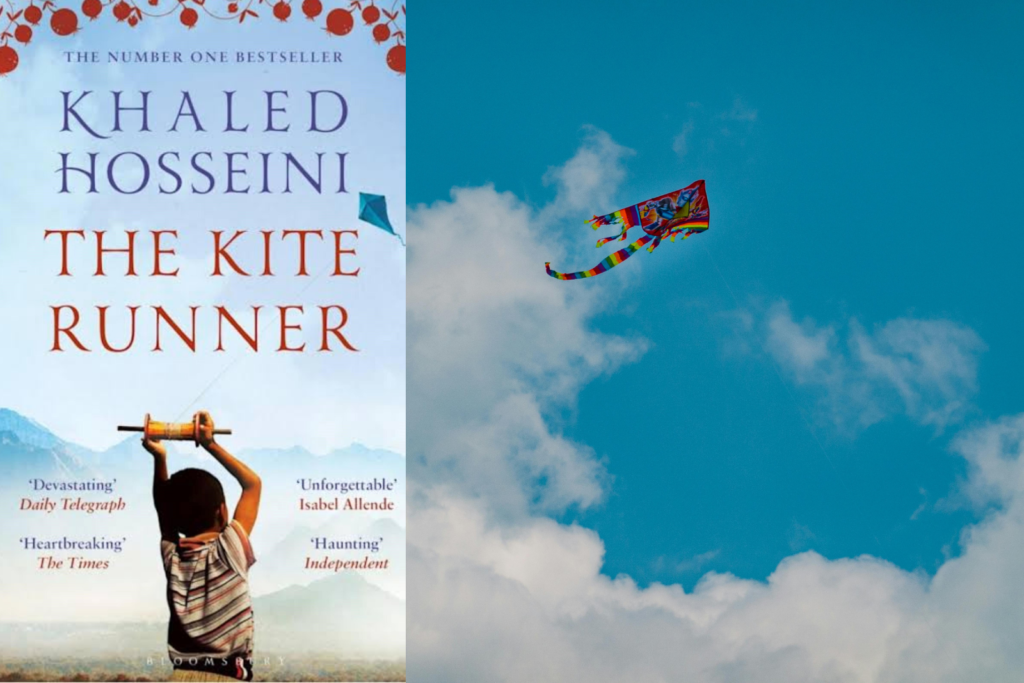
The Kite Runner by Khaled Hosseini is a novel about the silence that haunts a person forever.
By Sarah, published on Monday, January 19, 2026.
Silence can wound as sharply as violence. A person spends his life paying interest on the silence that he bargains for comfort.
The Kite Runner is a novel that devastates not through spectacle, but through memory. It is a story built on the unbearable weight of what is not done—of words swallowed, loyalties betrayed, and courage delayed until it is almost too late. Khaled Hosseini forces the reader to sit in discomfort, to witness how a single moral failure can echo across decades, shaping not only a life but also generations.
This is not a story about a bad moment; it is about living with that moment forever. The Kite Runner is a novel that does not beg for tears—it earns them. It wounds slowly, then deeper, until the pain feels personal. Khaled Hosseini does not write about guilt in the abstract; he gives it a face, a voice, and a memory that never loosens its grip.
From the very first pages, the reader is warned that what lies ahead cannot be undone. Amir tells us that everything changed in the winter of 1975, and as the story unfolds, we come to understand that this change is not a single moment of violence but a lifetime shaped by one terrible act of silence.
The Kite Runner is a novel that lingers like a wound, refusing to let go. It does not move forward so much as it drags you backward, into memory, into shame, into the quiet, unbearable moments that shape a life. Khaled Hosseini does not soften the story. He does not promise redemption or comfort. Instead, he asks the reader to sit in the ache of betrayal, guilt, and love that is never returned in equal measure.
The Kite Runner is not a novel that moves forward. It looks back. Again and again, it drags both its narrator and its reader toward a single winter afternoon and asks us to sit with it until discomfort becomes understanding. Khaled Hosseini does not offer the relief of distance or time; instead, he insists that the past is not something we escape, only something we carry. The story begins with the knowledge that something has already gone wrong, and every page after that feels like a slow reckoning with the cost of that wrong.
The relationship between Amir and Hassan is the emotional core of the novel and also its greatest tragedy. The friendship between Amir and Hassan is tender, unequal, and tragically doomed from the start.
Amir and Hassan’s childhood in Kabul is painted with light and innocence—the thrill of kite fights slicing through winter skies, laughter echoing under the pomegranate tree. But even in those moments of joy, the inequality between them hums beneath the surface. Amir is privileged, insecure, and desperate for his father’s approval.
Hassan is poor, Hazara, endlessly loyal, and content to love without being loved back in the same way. Hassan loves Amir with a purity that feels almost sacred. He runs kites for him, defends him, and believes in him without question. Amir, on the other hand, loves conditionally—his affection tangled with jealousy, insecurity, and a desperate need for Baba’s approval. Amir’s childhood in Kabul is shaped by longing. He wants his father’s approval with an intensity that borders on desperation, and he measures his worth through Baba’s silence as much as through his praise.
The alleyway assault is the novel’s moral center, and Hosseini writes it with restraint that makes it unbearable. Amir does not misunderstand what is happening. He does not lack time or awareness. He lacks courage. His decision to stay hidden is not framed as fear alone but as a choice—one made in exchange for a kite that represents his father’s pride. In that moment, Amir learns something terrible: that silence can purchase comfort. The tragedy of the novel is that he spends the rest of his life paying interest on that bargain.
What happens next is quiet, but it cuts deeper than any shout. Amir’s guilt grows like a shadow he cannot escape. He avoids Hassan, pushes him away, and lies to himself, pretending he did nothing wrong. When he frames Hassan for stealing, it is not out of anger—it is out of fear, shame, and weakness. And Hassan… Hassan takes it all. He says nothing. He does not cry. He does not fight. He leaves, carrying his loyalty and love like a weight that Amir will never repay. That silence haunts Amir forever. It is not a single moment that breaks him—it is every day afterward, knowing he betrayed the one person who would have never betrayed him. Hosseini makes it clear: some wounds are quiet and invisible, and yet they never heal.
Baba, too, is complicated, and his absence leaves Amir hollow. A man who values honor and strength carries a secret that fractures his own morality. His pride and distance teach Amir that love is something to earn rather than something freely given. When Baba dies, Amir loses not only a father but the chance for true forgiveness and understanding. America provides safety, but not peace. Amir builds a life, writes a novel, marries, and appears to move on—but the past waits patiently. Guilt is patient. Guilt does not forget.
Returning to Afghanistan years later, Amir finds a country broken by war, ruled by cruelty, and haunted by the ghosts of what it once was. Learning the truth about Hassan is unbearable: Hassan was more than a friend—he was family. He lived and suffered quietly, he died protecting what he loved, and his goodness never saved him. Amir sees at last that some people carry more than they ever should, while others run from the weight of their own mistakes.
Saving Sohrab is not a victory—it is a wound. The fight with Asif leaves Amir broken, bloodied, and humiliated, but for the first time in his life, he does not run. He stays and endures what he once could not face. Yet even this act does not erase what has been done. Sohrab carries a silence so heavy it feels alive, a weight of pain and fear that no rescue can fully lift. Amir carries it too, layered over decades of guilt that have never left him. Hosseini makes it clear: redemption is never clean or easy. It is fragile, earned only through suffering and sacrifice, and no act of courage can ever wipe away the shadow of the past.
For You, a Thousand Times Over
The final scene, with Amir running a kite for Sohrab, is almost unbearable in its quietness. When he repeats Hassan’s words, “For you, a thousand times over,” it is not victory. It is a promise made too late. It is hope threaded through grief and regret. Hosseini leaves the reader with a lesson that pierces deeper than any moralizing: love without courage is nothing. Silence can wound as sharply as violence. Some mistakes cannot be undone. And redemption is not forgiveness—it is choosing, finally, to face what you once ran from.
The Kite Runner is a novel that stays with you long after the last page. It asks the reader to look at their own alleys, to feel the weight of every cowardice they have ever committed, and to imagine what it would take to carry it with courage. It is heartbreaking, haunting, and painfully human—and that is why it matters.
“No forgiveness can erase the past; some mistakes live inside you, scratching at your soul every time you try to breathe.”