
The garage still has her husband’s tools, untouched since he passed six years ago. The china cabinet is full of dishes nobody uses anymore. Forty years of a life lived in one house, and their daughter has three weekends to figure out what to do with all of it before the house needs to be listed. She doesn’t know what anything is worth, doesn’t have the emotional energy to sort through it herself, and definitely doesn’t have the time.
This exact situation plays out in homes across the country constantly, and it’s the foundation of a real, growing business: helping families sell what’s left behind when a parent downsizes or moves into senior care.
“What This Business Actually Looks Like”
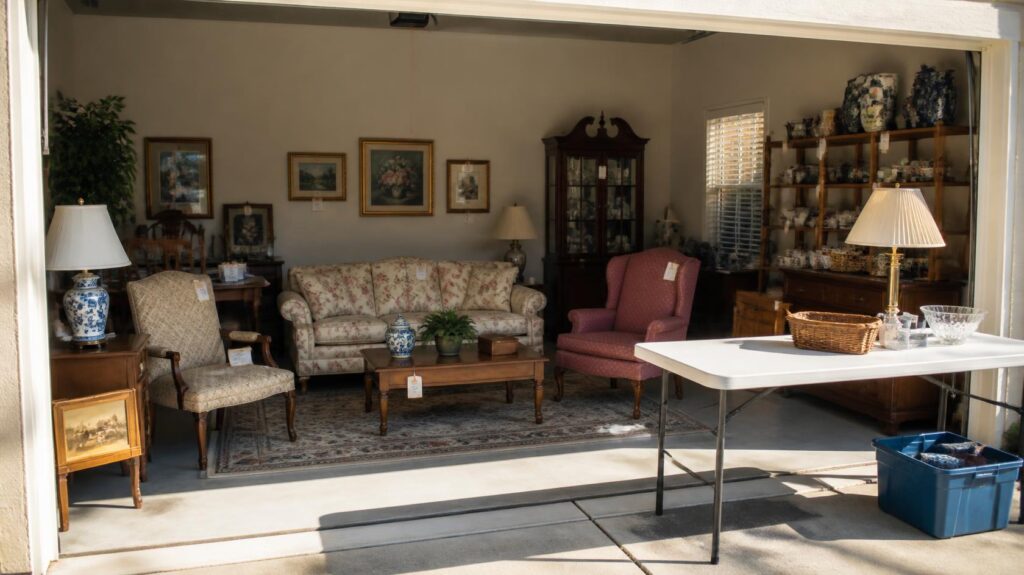
An estate sale business runs a home, prices, and sells the contents—furniture, antiques, collectibles, and household items—typically over one or two days, then takes a commission on what sells. While estate sale companies generally serve anyone liquidating a home (death, divorce, downsizing), specializing specifically in helping families downsize an aging parent’s home is a distinct, underserved angle most companies don’t lead with. Startup costs typically run $1,500-$7,000; no special license is required in most states; and the industry has grown into a real, sizable market—over $230 million in the U.S. as of the most recent data, with close to 800 established businesses nationally. There’s even a dedicated nonprofit trade association for the industry, the National Estate Sales Association (NESA), which sets professional standards and offers resources for people running these businesses.
This Isn’t Real Estate — Here’s the Difference”
To be completely clear before going further, this business is about selling what’s inside the home—the furniture, dishes, tools, collectibles, and everyday belongings a family accumulates over decades—not the house itself. Selling the actual property requires a licensed real estate agent, which is a separate profession entirely.
Here’s why this matters and why the demand for this business is so real: when an aging parent moves into a smaller home or assisted living, or when a family needs to sell a parent’s house after they’ve passed, the house usually can’t be listed for sale while it’s still full of a lifetime of belongings. Someone has to clear out and sell the contents first—before the house itself can go on the market. That’s exactly where this business fits in. You’re the essential first step in a process that a real estate agent typically can’t begin until you’ve finished. This is also why Step 6 below specifically recommends building relationships with real estate agents—they regularly need someone to handle exactly this before they can do their part.
Why This Fits “Low Budget, Real Demand, Easy to Start”
Low budget: Because you’re selling the client’s existing belongings rather than buying inventory, your upfront costs are mainly registration, insurance, and basic sale supplies (price tags, signage, a payment processor)—most owners start for $1,500-$5,000, and some begin even leaner by starting solo before hiring sale-day help.
Real demand: As more seniors downsize or transition into assisted living in the coming years, the need for someone to handle the physical process of clearing and selling a lifetime of belongings isn’t shrinking—if anything, it’s one of the more resilient service businesses, since it’s tied to major life events rather than discretionary spending.
Easy to start: Most states require nothing beyond standard business registration—no special estate sale license exists in most places. Someone could realistically run their first sale within a matter of weeks of deciding to start.
How to Start
1. Register Your Business and Get Insured
A basic LLC or sole proprietorship is typically all that’s legally required to begin—budget $50-$500 for registration depending on your state. General liability insurance is essential, though, since you’ll have strangers walking through a client’s home during the sale; budget roughly $500-$1,000 annually.
2. Learn Basic Appraisal and Pricing Skills
You don’t need a formal appraisal certification to start, but you do need a working knowledge of what things are actually worth—furniture, china, tools, and collectibles. Many new owners start by researching recently sold prices for similar items online before pricing their first sale and refine their instincts with every sale afterward. NESA’s member resources include category-specific pricing and research tools worth exploring as you build this skill.
3. Decide Your Commission Structure
Most estate sale businesses earn a percentage of total sales rather than a flat fee—commonly in the 30-40% range, though this varies by region and sale size. Some companies use a sliding scale, with the commission decreasing as total sale value increases.
4. Build Your Sale-Day Toolkit
Basic supplies: price tags and stickers, tables and folding chairs for staging, signage for directing traffic, and a mobile payment processor so you can accept cards on-site, not just cash.
5. Focus Your Marketing on the Parent-Downsizing Angle Specifically
This is what separates your business from a generic estate sale company. Instead of marketing broadly (“we handle all estate liquidations”), speak directly to the adult child navigating this specific, emotional situation—someone searching for help downsizing a parent’s home, not settling an estate after a death or a divorce. This framing alone will differentiate you from most local competitors, who tend to market generically.
6. Build Referral Relationships With the Right People
The people who will refer clients to you: senior move managers (a natural, complementary partnership — you handle what’s being sold, they handle the physical move), real estate agents who work with older sellers, elder law attorneys, and staff at senior living communities. A single strong relationship with a senior move manager in your area can become an ongoing source of referrals in both directions.
7. Run Your First Sale With Extra Care
Your first sale is your portfolio. Take genuine care with staging, pricing, and communication with the family—a good first experience, especially in an emotional situation like this one, is what turns into the reviews and referrals that build your business from there.
8. Ask for Reviews and Referrals Immediately After
A grateful family, relieved to have the process handled with patience and respect, is one of the most reliable sources of new clients in this business — a short, direct ask right after a successful sale consistently generates the next one.
The Startup Strategy Behind This Business
Beyond the steps, it’s worth understanding why this specific approach works from a business strategy standpoint—because the same principles apply whether you’re starting this business or evaluating any other idea.
Niche-down positioning. Most estate sale companies compete for the same broad market — anyone liquidating a home for any reason. By narrowing to one specific, well-defined audience (adult children downsizing an aging parent), you’re using a classic startup strategy: it’s far easier to become the obvious choice for one specific customer than to compete generically against every established company in your area. A smaller, more specific market is genuinely easier to win than a bigger, more generic one.
Low fixed-cost, asset-light model. Because inventory belongs to the client, not you, your business carries almost no ongoing overhead between jobs — no warehouse, no stock to manage, no capital tied up in unsold goods. This is the same lean-startup logic that makes service businesses attractive: you’re not betting money on inventory before you have a paying client.
Partnership-driven growth over paid acquisition. Rather than competing for cold, paid leads, this business grows primarily through referral partnerships—senior move managers, elder law attorneys, and real estate agents. This is a deliberate strategic choice: partnership-based growth is typically far cheaper and more durable than advertising-driven growth, since a referral relationship compounds over years, while an ad only works while you’re paying for it.
A natural path to scale. Most owners start solo, handling both sales and logistics themselves. As referral relationships mature and demand grows, the natural next step is bringing on part-time help for sales days only—keeping fixed costs low while increasing sale volume. This staged approach to scaling (prove the model solo, then add labor only where it’s needed) is a lower-risk path than hiring ahead of demand.
What This Job Really Asks of You
This work involves families at a genuinely difficult moment — grief, guilt over parting with a parent’s belongings, or the simple exhaustion of managing a life transition on top of everything else going on. Patience and a calm, respectful presence matter as much as pricing skill. It’s also physically demanding: moving furniture, being on your feet for long stretches during a sale, and sometimes navigating a home that’s been lived in for decades without much recent upkeep. This isn’t a transactional retail job—you’re a project manager for someone’s family history as much as you are a salesperson.
Why It’s Worth It
Once you’ve built a few strong referral relationships—particularly with senior move managers and elder law attorneys—this business tends to generate steady, recurring work without much ongoing marketing spend, since so much of it runs on trust and word-of-mouth rather than advertising. And because most local competitors market broadly instead of speaking directly to this specific situation, the families who search for exactly this kind of help tend to remember, and recommend, the business that spoke to their actual situation first.
FAQ
Do I need to be certified as an appraiser to price items correctly? No formal certification is required to start, though building genuine pricing knowledge over time — through research and experience — is essential to running a fair, successful sale.
How is this different from a general estate sale company? The service itself is similar, but the marketing and client relationships are different — you’re speaking directly to adult children navigating a parent’s downsizing, not the broader estate liquidation market (which also includes deaths, divorces, and debt-driven sales).
What if the family wants to keep some items and only sell the rest? This is common and expected — most estate sale businesses work with the family beforehand to set aside anything being kept before pricing and staging the remaining items for sale.
How do I find my very first client? Reach out directly to one or two senior move managers or elder law attorneys in your area and introduce your business specifically as focused on parent downsizing situations—this relationship alone is often enough to generate your first referral.
Keep Reading
If you’re building a business that supports families navigating a parent’s transition, these related guides on this site cover closely connected ground: How to Start a Senior Move Management Business in 2026, and How to Start a Senior Home Safety Business in 2026.