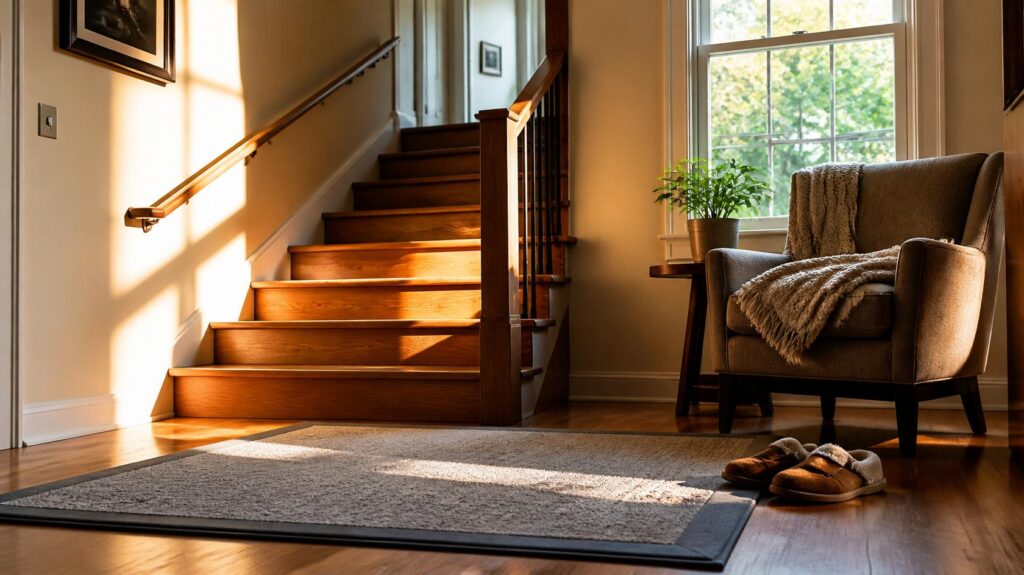
Picture an adult daughter, three states away from her 78-year-old mother, lying awake worrying about a phone call she hopes never comes. Her mother insists she’s fine living alone. But there’s a loose rug by the stairs, no grab bar in the shower, and a porch step that’s gotten harder to manage every year. The daughter would pay almost anything for someone trustworthy to walk through that house, fix what’s dangerous, and tell her honestly what else needs attention.
That’s not a rare, one-off story. It’s a documented, massive, and growing problem—and it’s a business.
Quick answer: A senior home safety business involves assessing seniors’ homes for fall hazards and installing simple fixes—grab bars, better lighting, non-slip flooring, handrails, and ramps. You typically charge for a home assessment plus installation, build referral relationships with physical therapists and home health agencies, and can start with minimal certification requirements in most areas. Startup costs are low; demand is driven by a large and growing aging population.
Why the Demand Is Real (And Growing)
The numbers here aren’t soft trend talk—they’re hard, well-documented statistics:
- According to the CDC, roughly 1 in 4 adults aged 65 and older falls each year, adding up to an estimated 37 million falls and about 9 million injuries annually in the U.S. alone.
- Falls send more than 3 million older adults to the emergency room every year and cause over 1 million hospitalizations, with the annual medical cost of these falls now estimated at around $80 billion.
- The preference for staying home is overwhelming: 88% of adults aged 50–80 say it’s important to remain in their own home as long as possible, and 60% would rather receive care at home than move into assisted living.
- The demographic wave behind all of this is enormous — the U.S. is projected to have about 71.2 million people aged 65+ by 2030, and for the first time in history, older adults are expected to outnumber children by 2035.
Put simply: a huge and growing population wants to stay in homes that, statistically, are likely to hurt them — and most of those homes were never built with aging in mind. That gap between “wants to stay home” and “home isn’t actually safe” is where this business lives.
The Business Model
You’re not a general contractor, and you don’t need to be. This business has two connected halves:
- The assessment—walking through a home with a structured checklist, identifying specific fall risks room by room
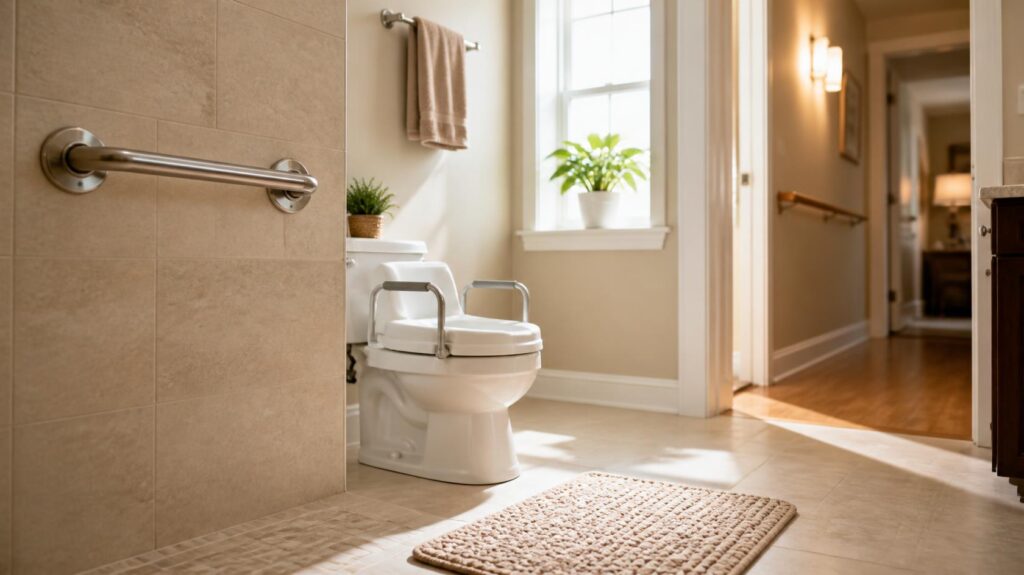
- The fix—installing (or coordinating) simple modifications: grab bars, non-slip mats, brighter motion-sensor lighting, raised toilet seats, handrails, small ramps
Some operators do both. Others specialize in assessments only and refer out installation work to a handyman partner, keeping overhead near zero.
Step 1: Understand Your Three Buyer Types
Each one needs a different pitch:
- Adult children living elsewhere—often the real decision-makers and payers, motivated by worry and guilt, and the easiest group to sell “peace of mind” to
- Seniors themselves, especially after a fall, a health scare, or before a planned surgery
- Referral partners—physical therapists, home health agencies, occupational therapists, and senior living placement agencies, who see fall-risk clients constantly and don’t currently have anyone reliable to refer them to
Most successful operators in this space report that referral partnerships, once established, become their steadiest source of new clients — far more consistent than one-off marketing.
Step 2: Build a Simple Home Safety Checklist
You don’t need formal certification to start (though certifications like CAPS — Certified Aging-in-Place Specialist — exist and can help you win trust and charge more later). Build a room-by-room checklist covering:
- Bathroom: grab bars, non-slip mats, raised toilet seat, walk-in shower feasibility
- Stairs: handrails on both sides, lighting, non-slip treads
- Living areas: rug removal or securing, furniture height and stability, clear walkways
- Entryways: ramps for small steps, adequate outdoor lighting, secure railings
- Bedroom: bed height, nightlight placement, clear path to bathroom
Step 3: Do Three Free or Low-Cost Assessments to Build Proof
Before charging full price, offer a handful of free or heavily discounted assessments — ideally for people you know, or through a local senior center. Document the before/after with photos. This becomes your portfolio and your testimonials, exactly the kind of trust signal this business depends on.
Step 4: Price It in Two Parts
- Assessment fee: typically $100–$300 for a thorough home walkthrough and written report
- Installation/modification costs: either a flat project fee ($500–$3,000+ depending on scope) or hourly, often with materials marked up modestly if you’re sourcing them
A realistic first-client example: a $150 assessment followed by a $600 modification package (grab bars, non-slip mats, one handrail) is a believable, affordable entry point for most families. Remember that daughter from the opening, lying awake three states away? A visit like this — for $750 total — is exactly what would let her finally sleep.
Step 5: Build Referral Relationships Deliberately
Visit local physical therapy clinics, home health agencies, and senior centers with a simple one-page flyer and your assessment checklist. Offer to do a free assessment for one of their current clients as a demonstration. These relationships take a few weeks to build trust, but tend to produce the most consistent, highest-intent leads once established — better than most paid advertising for this type of business.
Step 6: Don’t Oversell — Recommend What’s Actually Needed
The families you work with are often anxious and would say yes to almost anything you suggest. Resist the urge to upsell unnecessary modifications. This is a trust-based, word-of-mouth business, and a reputation for honest, right-sized recommendations is what generates referrals — both from families and from professional partners who don’t want to be embarrassed by an over-aggressive contractor.
Step 7: Consider Tech Add-Ons as You Grow
Once established, you can expand into medical alert device setup, fall-detection sensors, or smart home monitoring — the global smart home market’s senior-focused segment is one of its fastest-growing categories, and offering setup/support services for these devices (many seniors struggle with the technology itself) is a natural extension of the trust you’ve already built.
Step 8: Know How Clients Can Get Help Paying — This Is Your Competitive Edge
Here’s something almost no competing content about this business covers, and it’s one of the most valuable things you can offer a client: many families assume they have to pay for everything themselves. Often, they don’t. There are real government programs that help cover the cost of home safety changes for seniors — and just knowing they exist makes you far more valuable than a handyman who only knows how to install a grab bar.
In simple terms, here’s who can help pay:
- Medicaid, through what’s called a “waiver” program: If a senior is already on Medicaid, most states have a program that will help pay for things like grab bars and ramps—because it’s much cheaper for the state to pay for a $10,000 home fix than to pay for years in a nursing home. The catch is that the waitlist to get approved can take a long time, sometimes years, so it’s worth applying early, before it’s urgently needed.
- A grant from the USDA (yes, the agriculture department) for people in rural areas: Seniors 62 and older living in a rural area can get up to $10,000 as a grant (money that doesn’t need to be paid back) to help fix up their home for safety.
- Help for military veterans through the VA: Veterans may qualify for extra funding through the VA specifically to adapt their home for safety and accessibility.
- The local “Area Agency on Aging”: This is a free, local government office that exists in almost every county specifically to help seniors find resources—including home safety funding programs that are hard to find with a simple Google search. This is usually the best first phone call for any family that’s unsure where to start.
You don’t need to become an expert in any of this. Simply keeping a one-page list of these four options to hand to families — and mentioning that help paying for this exists — builds real trust and often speeds up a family’s decision to move forward with you.
A Note on Insurance
Before you take on paying clients, get general liability insurance — you’re working inside people’s homes and around fall-risk-prone individuals, so this isn’t optional. Basic general liability policies for small home-service businesses are widely available and relatively affordable; a local insurance agent or business insurance marketplace can help you find one suited to home modification work specifically.
Why Now Is the Right Moment
This isn’t a trend that might fade — it’s a demographic certainty already locked in by birth rates from decades ago. The aging-in-place and home modification market has already grown into a multi-billion-dollar industry, and it’s still early relative to where the demographics are heading over the next decade. Unlike AI-driven business ideas that face constant technological shifts, this one is about a permanent, predictable human need: staying safe at home while getting older.
A Reality Check
This business involves real trust and real responsibility—you’re working in vulnerable people’s homes, sometimes with family members who are anxious or grieving the loss of a parent’s independence. Move at the pace the family is comfortable with, be honest about what can and can’t be fixed, and know when to refer a family to a doctor, occupational therapist, or elder-care professional instead of trying to solve everything yourself. The businesses that last in this space are the ones people trust enough to recommend to a friend.
Frequently Asked Questions
Do I need a license or certification to start? In most areas, basic assessments and simple modifications like grab bars don’t require a special license, though this varies by location and you should check local requirements. The CAPS (Certified Aging-in-Place Specialist) certification isn’t required to start but can help build credibility and justify higher pricing once you’re established.
How much can I realistically earn? Combining assessment fees ($100–$300) with modification project fees ($500–$3,000+), a handful of steady referral partnerships can realistically support $3,000–$8,000/month within the first year, growing significantly as referral relationships mature.
How do I find my first clients? Start with people you know, local senior centers, and a few free assessments to build a portfolio. Then approach physical therapy clinics and home health agencies directly—they see fall-risk clients daily and often don’t have anyone reliable to refer.
Is this market already saturated? No — compared to categories like AI services or e-commerce, senior home safety is genuinely underserved online and in most local markets, despite the size and growth of the underlying demographic need.
What’s the biggest mistake new operators make? Overselling. Recommending only what’s genuinely needed — and being transparent about it — is what turns one client into five referrals.
Do families really have to pay for everything out of pocket? No — several programs can help cover the cost. If a senior is on Medicaid, many states will help pay through a waiver program. Seniors in rural areas may qualify for a USDA grant. Veterans may get help through the VA. And the local Area Agency on Aging (a free county office) can point families toward other options. Knowing this — even at a basic level — is a genuine edge over competitors who don’t mention it.
Keep Reading
Exploring other business ideas? How to Start an AI Automation Agency in 2026 is a step-by-step guide to a very different, tech-driven business model — worth a look if you want to compare paths before deciding which one fits you.