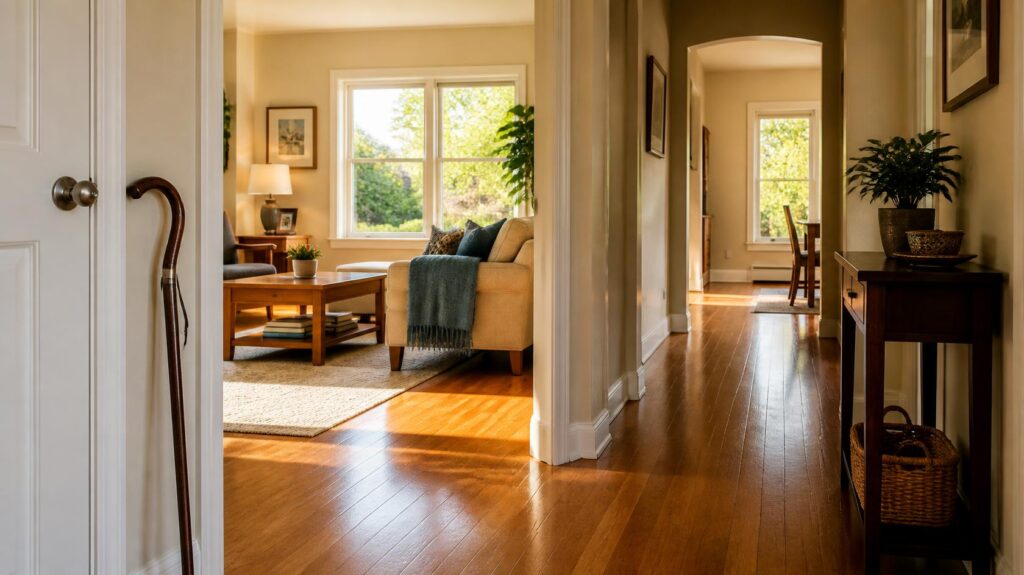
Every 20 minutes, an older adult in the U.S. dies from a fall. Every single second of every day, one falls. These aren’t estimates or rounded-up statistics for effect—they’re figures tracked by the Centers for Disease Control and Prevention, and they explain a very specific kind of worry that a lot of adult children carry quietly: is Mom or Dad’s house actually safe, or are we all just hoping it is?
The good news is that most fall risks in a home are fixable, often in an afternoon, often for very little money. This checklist walks through exactly what to look for, room by room, based on the CDC’s official fall-prevention guidance for older adults.
Quick answer: The most common fall hazards in a senior’s home are loose rugs, poor lighting, missing bathroom grab bars, and stairs without handrails on both sides. A full home walkthrough—checking floors, stairs, the kitchen, bedroom, and bathroom—combined with a review of medications and vision covers most of what actually causes falls.
| Room | Most Common Hazard | Fastest Fix |
|---|---|---|
| Floors & Walkways | Loose throw rugs, clutter, cords | Remove or secure rugs; clear pathways |
| Stairs & Steps | Missing handrail on one side, poor lighting | Add handrails on both sides; light switches top and bottom |
| Kitchen | Reaching high or bending low for items | Move everyday items to waist-height shelves |
| Bathroom | No grab bars, slippery tub/shower floor | Install grab bars; add non-slip mat |
| Bedroom | No light on the path to the bathroom | Add a nightlight or motion-sensor light |
| Whole Home | Dim hallways and entryways | Fix burned-out bulbs; add nightlights |
Why This Matters More Than It Might Seem
According to the CDC, about 1 in 4 adults aged 65 and older falls every year, and roughly 1 in 5 of those falls results in a serious injury like a head injury or a broken bone. Falls are the leading cause of both fatal and non-fatal injury among older adults — and the vast majority happen at home, in rooms that seem completely familiar and safe to someone who’s lived there for decades.
That familiarity is actually part of the problem. A rug that’s been in the same spot for twenty years doesn’t register as a hazard to the person who lives there—but changes in balance, vision, and reflexes that come with age mean the same rug that was harmless at 60 can cause a serious fall at 80.
The Room-by-Room Checklist
Floors and Walkways
- Remove throw rugs entirely, or secure them flat with double-sided tape so they can’t slide or curl at the edges
- Clear walkways of cords, boxes, and clutter — anything that could be tripped over in low light
- Make sure floors aren’t freshly waxed or left slippery
Stairs and Steps
- Install handrails on both sides of every staircase, not just one
- Make sure stairs are well-lit, with light switches at both the top and bottom
- Check that stair edges are visible and not the same color as the tread, especially for anyone with reduced depth perception
- Repair any loose or uneven steps
Kitchen
- Move frequently used items to shelves at waist height, so there’s no need to reach up high or bend down low
- Clean up spills immediately, and keep the floor free of clutter
Bathroom
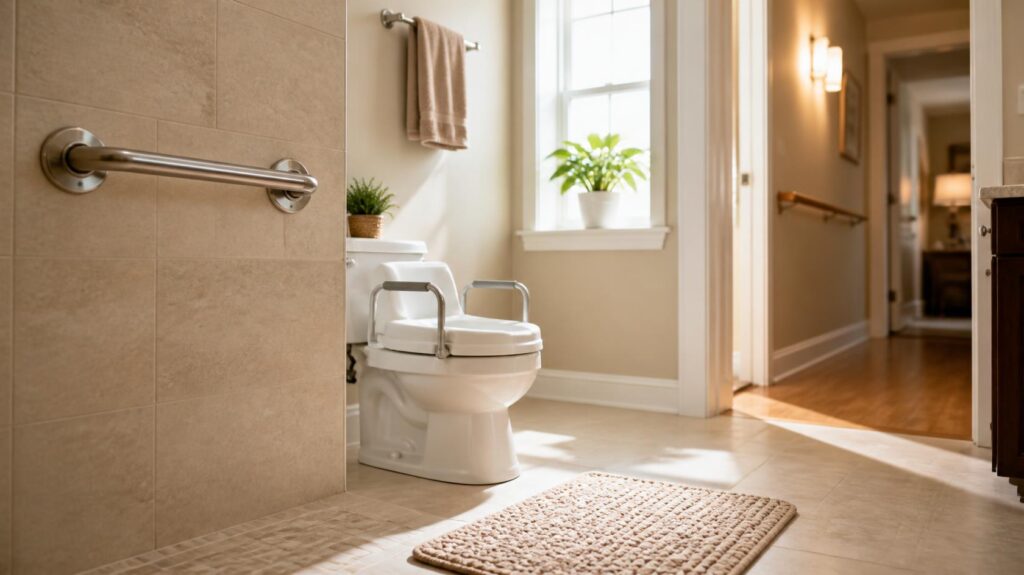
- Install grab bars inside and next to the tub or shower, and next to the toilet—these are one of the single most effective, lowest-cost fixes
- Use a non-slip mat or adhesive strips on the tub and shower floor
- Consider a raised toilet seat if getting up and down is difficult
Bedroom
- Keep a clear, unobstructed path from the bed to the bathroom
- Add a nightlight or motion-sensor light along that path
- Make sure the bed height allows feet to touch the floor comfortably when sitting on the edge
Lighting (Whole Home)
- Increase overall brightness, especially in hallways and entryways
- Add nightlights in hallways and bathrooms
- Fix any burned-out bulbs immediately—dim spots are hazards, not just inconveniences
Beyond the Checklist: Three Questions Worth Asking
A home walkthrough covers the physical hazards, but fall risk isn’t only about the house. The CDC also recommends checking the following:
- Medications: Many prescriptions and over-the-counter drugs can cause dizziness or drowsiness. A pharmacist can review a full medication list and flag anything that raises fall risk—AARP’s medication record tool is a free way to keep that list organized for appointments.
- Vision: Annual eye exams matter more with age — reduced depth perception and poor lighting adjustment are common, quiet contributors to falls.
- Footwear: Loose slippers and socks on hard floors are a frequent, easy-to-overlook hazard. Supportive, non-slip shoes worn even at home make a real difference.
Warning Signs Worth Taking Seriously
If your parent has fallen in the past year, feels unsteady while standing or walking, or has started avoiding certain rooms or activities out of fear of falling, it’s worth raising directly with their doctor. These are the exact questions healthcare providers use to screen for fall risk, and answering “yes” to any of them is a real signal, not something to brush off.
For local, in-person fall prevention programs and classes, the National Council on Aging maintains resources by area and is worth checking alongside this checklist.
When a Checklist Isn’t Quite Enough
Going through this list yourself is a genuinely good first step, and for a lot of families it’s enough. But it’s easy to miss things when you’re not trained to spot them—a subtle lighting issue, a doorway that’s a little too narrow, a shower that needs a specific type of grab bar for a specific wall type. If you want a second, professional set of eyes on the house, a full in-home safety assessment can catch what a checklist alone might not and can also help you find out whether the cost of any modifications can be partly covered through Medicaid, VA, or local senior assistance programs.
FAQs
How often should I redo this checklist?
Once a year is reasonable for most homes or any time your parent’s mobility, vision, or health changes noticeably.
What’s the single most important fix to make first?
Bathroom grab bars and securing or removing loose rugs — these two categories account for a large share of preventable home falls and are usually the cheapest, fastest fixes.
My parent refuses to remove their rugs or make changes. What do I do?
This is common — changes can feel like a loss of independence rather than a safety improvement. Framing it as “let’s do this together so you can stay in your home longer” tends to land better than framing it as a warning. Involving their doctor can also help, since the recommendation carries different weight coming from a medical professional.
Is a home safety assessment worth paying for if I’ve already done this checklist?
If your parent has already fallen, has a diagnosed balance or vision issue, or you simply want peace of mind beyond a DIY check, yes—a professional assessment is trained to catch hazards a checklist can miss and can advise on modifications specific to the home’s layout.
One Afternoon Can Change a Lot
None of this requires a renovation or a big budget. Most of what’s on this list—a grab bar, a secured rug, and a brighter hallway light—can be done in a single afternoon, often for less than the cost of a nice dinner out. If you’ve been carrying that quiet worry about a parent living alone, walking through this checklist together is one of the most concrete, doable things you can do about it this week.