
Ninety-one percent of small businesses already using AI say it’s boosting their revenue, according to a Salesforce survey of over 3,300 small and medium business leaders.
That’s not a projection. It’s what’s already happening — and it’s the exact kind of shift that determines whether a new business is entering a market at the right moment or the wrong one.
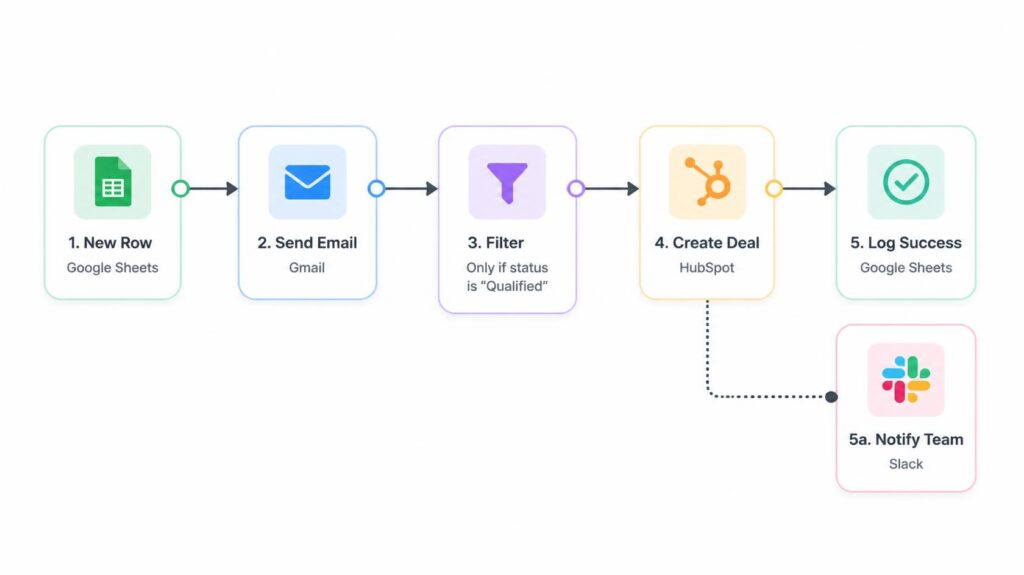
This article looks specifically at the AI automation agency model—where you’re hired to map a small business’s repetitive tasks and implement AI tools to handle them—not build your own AI product or app.
If you’ve been considering starting an AI automation agency, the question worth answering first isn’t “what should I sell.” Plenty of articles already answer that.
The harder, more useful question is,
Is the timing actually right, or has the window already started closing?
To answer that honestly, it helps to go back to someone who’s spent years evaluating exactly this question for a living.
Using Sam Altman’s own startup-success framework to find out.
What Sam Altman Says Actually Predicts Startup Success
Sam Altman, former president of Y Combinator and CEO of OpenAI, has spent years watching thousands of startups either take off or quietly fail. In a well-known talk at YC’s Startup School, he laid out what he’s found actually separates the ones that make it from the ones that don’t.
His main point was simple: the more people naturally tell their friends about what you built, without being asked to, the more likely your business is to succeed. If customers only stick around because of ads or discounts, that’s a warning sign. If they bring you new customers on their own, that’s the real thing.
Beyond that, he pointed to a few other things successful startups tend to have in common:
- You can explain what the business does in one or two plain sentences — no jargon needed.
- The market it’s in is actually growing, not just getting a lot of buzz online.
- The person running it genuinely cares about the problem, not just the potential paycheck.
- The team gets moving and tries things, instead of over-planning before doing anything.
Altman wasn’t talking about AI when he said any of this—it’s general advice for any startup. But it turns out to be a good lens for checking an AI automation agency specifically because right now, both the tools and the market for this business are changing fast—which is exactly the kind of moment his advice is meant to help you judge.
Like most AI automation agencies, this is fundamentally a B2B business — your clients are companies, not consumers. For more ideas in this space, check out our guide to 12 B2B business ideas worth starting today.
Checking the Market Against Altman’s Criteria
Quick scorecard:
| Criteria | Verdict | Why |
|---|---|---|
| Genuinely growing market? | ✅ Yes | Adoption jumped 42% → 57% in a single year |
| Easy to explain in one sentence? | ✅ Yes | “I set up AI to handle your repetitive tasks automatically.” |
| Solves a problem people already know they have? | ✅ Yes | Owners already know they should automate—they lack someone to implement it |
| Low technical barrier to start? | ✅ Yes | Built on no-code tools, not custom AI development |
| Still low-competition? | ⚠️ Only if specialized | 900+ companies already offer generic versions |
None of this is trend-chasing. Adoption jumped from 42% to 57% in a year, with 71% of small businesses planning to invest even more — a market still climbing, not one that’s already peaked.
The pitch itself is also easy to say out loud:
I’ll find the repetitive tasks eating your time and set up AI to handle them automatically” is a sentence anyone can repeat to a friend, which is exactly the word-of-mouth quality Altman points to.
Most small business owners aren’t confused about whether they should automate—they already know they should. What they’re missing is someone who can actually do it for them, not someone explaining why they should. That gap is where this business lives, and closing it doesn’t take an engineering background: the tools built for this (Zapier, Make.com, and n8n) are made for non-programmers.
The one skill that actually matters — sitting with a business owner and turning their messy workflow into something automatable — isn’t something Altman measured with a percentage, but it’s the real job.
The Honest Caveat: This Market Has Gotten Crowded, Fast
Timing being right doesn’t mean this is an easy or overlooked opportunity anymore. It isn’t.
The AI automation agency model has already been widely covered as a business idea, and real operators are already active in it—one dataset tracking business models found over 900 companies already running this exact service, alongside more than 150 live freelance job postings for this kind of work at any given time.
That’s a signal of real demand, not a red flag on its own. But it does mean the “just start an AI automation agency” advice on its own isn’t enough anymore.
Altman’s own framework points to why: a generic version of this business, without a specific niche or a founder who genuinely understands one industry’s workflows, doesn’t have the differentiation to spread by word of mouth the way his framework describes.
The gap between the two versions is stark once you see it concretely.
“I build AI automations for businesses using n8n and Make” puts you in direct competition with thousands of operators worldwide, many charging less than you ever could sustainably.
“I build AI patient intake systems for med-spas that cut front-desk manual work by 70%” puts you in competition with almost nobody because almost no one has positioned that specifically.
Healthcare and med-spa automation, real estate lead handling, and professional-services intake are all currently commanding meaningfully higher build fees than generic offers—precisely because the buyer isn’t comparing you to a commodity.
The agencies making this work aren’t generalists. They’re specializing—one industry, one workflow type, one clearly defined problem — the same pattern already covered in this site’s guide to starting an AI automation agency and its breakdown of specific business tasks worth automating.
What You Can Realistically Earn
Most agency owners describe a similar early trajectory: close to nothing in the first month or two while you’re learning and landing your first client, then real income once you have two or three retainer clients running.
Typical retainers land between $500 and $3,000 per client per month, and higher-value niches — healthcare, legal, and other regulated industries — often command $2,000 to $5,000, since the problems being solved carry more weight and specialists have less competition. Reaching $6,000 to $10,000 a month in recurring revenue generally means having three to five retainer clients, which most agency owners who talk about this openly say realistically takes several months of steady client acquisition, not weeks.
This isn’t a business you quit your job for after two weeks. It’s a genuinely achievable one — but the timeline runs in months, and the income depends far more on how many clients you can land than on how advanced your automations are.
Like most AI automation agencies, this is fundamentally a B2B business — your clients are companies, not consumers. For more ideas in this space, check out our guide to 12 B2B business ideas worth starting today.”
So, Is It the Right Time?
Based on Altman’s framework, the honest answer is: the timing is right, but the easy version of this opportunity already closed.
The conditions, he says, to look for are all there—you just read through them. What’s changed is that a generic pitch alone won’t cut it anymore.
The version worth building now is the specialized one: a specific industry, a specific recurring task, and someone who can speak to that problem better than a generalist ever could.
FAQ
Is it too late to start an AI automation agency in 2026?
No, but the generic version of the business is now competitive. The opportunity that remains is in specializing — picking one industry or one specific workflow and becoming the go-to option for that narrow problem, rather than offering general automation services to anyone.
Do I need to know how to code to start one?
No. Most AI automation agencies are built on no-code platforms like Zapier, Make.com, and n8n, which are specifically designed for people without a programming background. The more valuable skill is understanding a business’s actual workflow well enough to know what to automate.
What does Sam Altman’s advice have to do with AI automation specifically?
His framework wasn’t written about AI — it’s general advice on what makes any startup succeed. It applies well here because the AI automation agency model happens to check several of his boxes: a simple, explainable product, a genuinely growing market, and low technical barriers to entry, which is a combination his research associates with real timing advantage.
What’s the hardest part once you actually start—the tech or something else?
Client acquisition, not the technical build. Among agency owners who discuss this openly, the recurring theme is the same: building the automation is rarely what stalls people—finding the first few paying clients is. The approach that consistently works best is picking one specific, high-value problem (missed-call follow-up, lead response speed, or appointment booking) for one specific industry and showing a working example before pitching, rather than explaining AI capabilities in the abstract.
How much should I charge for this kind of work?
Most agencies move away from hourly pricing quickly and toward either a flat monthly retainer or value-based pricing tied to what the automation actually saves or earns the client. A common approach for early clients is pricing around 10–20% of the value the automation is expected to generate in its first year—which keeps the ask easy to justify since the client can see the return before committing long-term.